Concrete Mixers

0
Soil Stabilisation and Laying Concrete

A Reversible Drum Concrete Mixer

The UK construction industry continually faces a problem with soil stabilization. This has become more obvious in recent weeks as we have tackled issues created by consistent down pours. The risk of soil liquefaction is significant in areas of seismic activity and risks are compounded by heavy rain. Although the UK does not suffer seismic problems on the same scale as some other regions of the world, it is still an issue for safety officials. This is mainly because there has been an increase in the number of recent cases.

The answer for construction companies has been to create a solid base from which to construct. Where there is an increased risk of liquefaction, the answer has been to drill holes that are filled with concrete. This technique creates concrete columns, which form the base for a concrete slab on which construction takes place. The slab is then able to hold large loads thanks to the stabilizing columns. The columns increase slope stability as well as reduce settlement.


Reduction in Costs


In previous situations where the cost of construction has been inflated because of the problems with soil stability, stabilization has been a viable alternative. Unsuitable bases had been extracted in most large-scale projects and removing them was a major expense. Now we are able to correct the soil and improve stability without the need for mass excavation. The time saving of using stabilizing has also reduced costs of major projects. Where projects would have been too disruptive, there are now viable alternatives. When soil is stabilized, construction can continue in the same way as any other project.

The ability to construct roads, schools or even shopping centers on practically any surface has increasingly been welcomed by the construction industry. There have been many successful cases of soil stabilization on a large scale prior to the laying of concrete. In Bridgend, a new Asda and car parks supermarket were built on land that had soil stabilization prior to concrete pouring, as did the Addenbrookes Hospital, Cambridge.


Road Constructions Benefit from Soil Stabilization


Where there was previously unsuitable ground for the laying of concrete for roads, stabilization has meant expansion and improvement was possible. Roads that have benefited from this technique include the M25, A2/M2 and the Weymouth relief road to name just a few. Authorities were previously unable to pour concrete because of a likelihood of a shift in the base. Following stabilization, roads are ready to accept concrete bases and have exceptional load bearing abilities.


Tunnel Building Following Stabilization


The construction of tunnels often uses soil stabilization before concrete spraying takes place. There is invariably, a need for soil stabilization where the installation of pre-constructed concrete tunneling and the laying of concrete base for track takes place. This is particularly important in densely populated areas at surface level where there is a risk of catastrophe associated with soil liquefaction. The pumping of concrete alone is not enough to satisfy increasing safety requirements as over development of inner-city locations takes place.


A safer Solution


In previous large-scale sub-surface construction projects, there had always been a necessity to pump fresh concrete in on a systematic basis and this was inevitably a race against time. There were dangerous practices employed that were amplified when there was a problem with the supply chain of concrete mixers or concrete pumps. These issues were sometimes unavoidable due to the location of the construction sites. Soil stabilization methods have reduced the danger associated with these projects and the critical nature of continued concrete pumping has been reduced.

With concrete pumps in high demand, there are still issues with large-scale projects, but the main issue of safety has been dramatically reduced.

Share

Filed under Concrete Mixers by . Comment#

0

Concrete mixers are used for a variety of construction jobs where a cement mixture is needed.

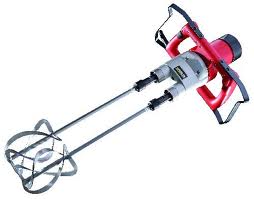
These mixers help in making a mixture of cement, sand/gravel and water using appropriately measured quantity of each material and thus makes a concrete paste. A concrete mixer’s rotating drum, around a chute, run by a machine makes a homogenous mixture out of these materials and saves workers a lot of manual hard work.

Concrete Mixers 1

The mechanically or machine operated concrete mixers, as we know them now, have been in use for a century now. From construction of large buildings to small projects, like making fence posts in our discussions here, concrete mixers are a regular contributor. The difference is that larger construction sites always use powered ones while small scale mixing may be achieved by traditional mixers that are hand held and operated. The latter involve the use of drums and wheelbarrows and your good old hands. Check out concrete fence posts and gravel boards too.


Concrete Mixers 2

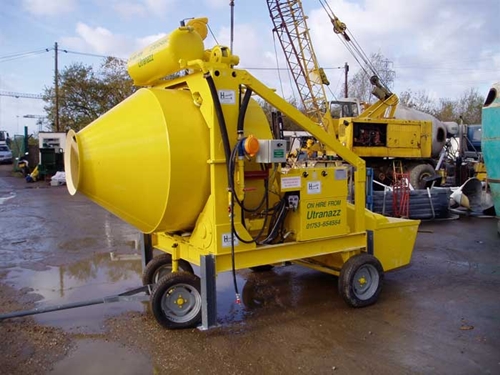
It is obvious that since we are dealing with the topic of making Concrete Fence Posts, which has smaller concrete requirements comparatively, you won’t need a big truck size concrete mixer that you also often see going to and from construction sites with a big drum slowly but constantly rotating. However, if you are dealing with a big farm or a similar large area, a portable concrete mixer would be an appropriate choice as it can be hauled around the whole periphery hitched to the back of your flatbed semi truck.

So what kind of concrete mixer should you choose? Like all planned projects, you have to start with the size of your project. If you are doing a handful of posts only, you might not even need a mixer and maybe able to do with an alternative to using concrete mixers, that is doing it old style measure, mix and pour with hands on. On the other hand, if you decide that you do need one and you are an average sized project, it is clear that you need it only once in so many years and so renting a mixer is the way for you to go. Look up in your yellow pages or on the internet for your local area and you’re sure to find a bunch of companies offering portable concrete mixers on hire basis.


Concrete Mixers 3

In such a case, the most commonly used mixer is the 32 liter capacity size. Average and smaller sized fence posts project would be easily handled using one of these. It weighs around 50-60 lbs and is easy to haul around. However, for larger farm fences like mentioned earlier, larger capacity concrete mixers are also available.

Check at your local home supplies store, like Home Depot or Lowe’s, if you want to buy it for keeps. If you want to rent it, check out the local construction companies and don’t forget to explain your clear needs at both places. With right calculation and right choice of a concrete mixer, you’ll be able to construct your concrete fence posts in a jiffy.

Share

Filed under Concrete Mixers by . Comment#